
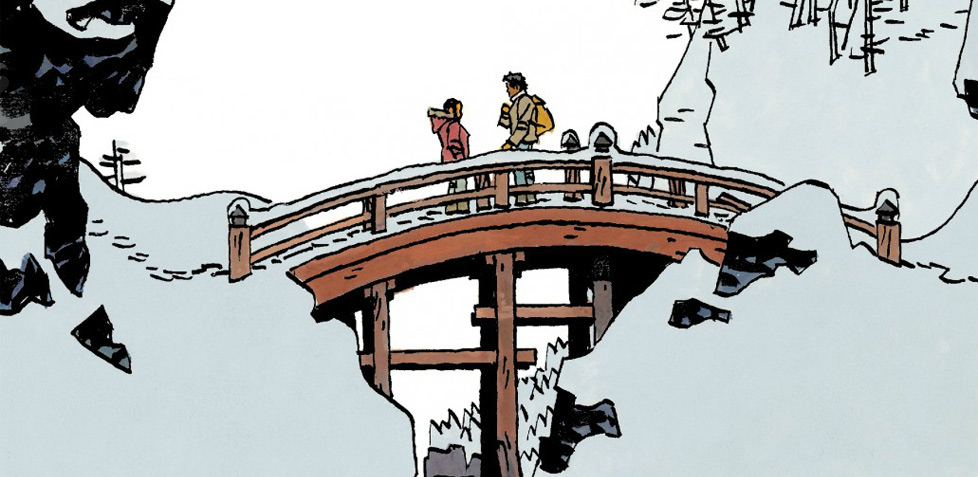
Le Bouddha d'Azur
De Azuren Boeddha/Der Buddha des Himmels
2005 (part 1); 2006 (part 2)

Covers of the first editions

Cover of the large edition of Raspoutine (2006)

Cover of the integral edition (2010)
A Tibetan fairy tale, that is how I would
describe the story of the two albums. With these albums, Cosey starts in a new Dupuis
collection: Empreintes/Impressies (the Dutch edition appearing with a poor soft cover).
A fairy tale
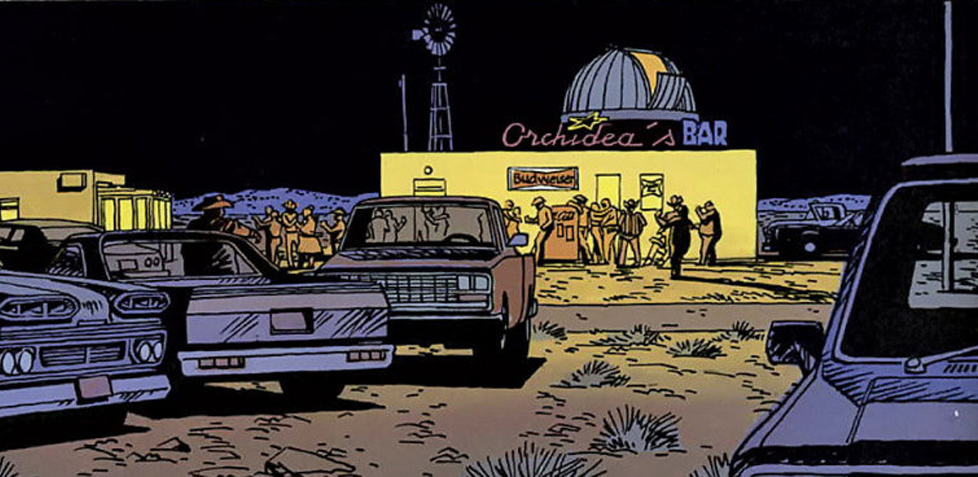
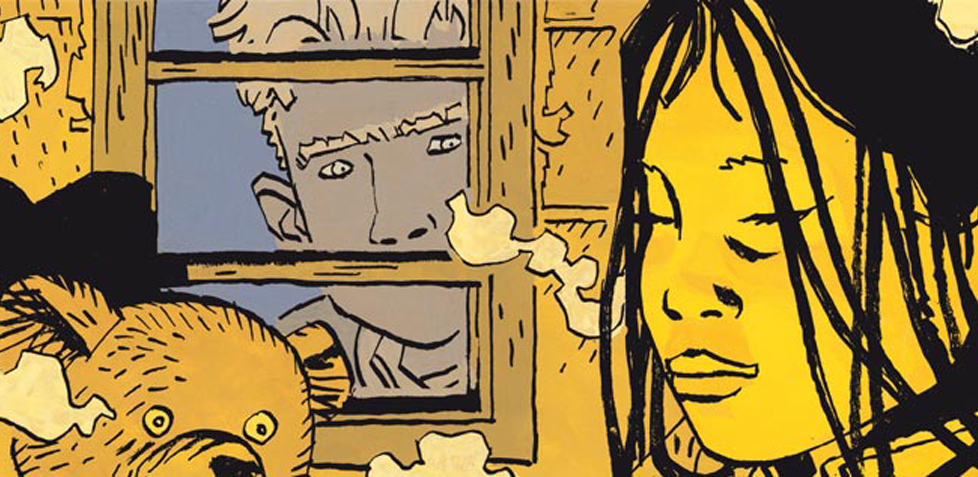
Cosey tells about the predestined love
between an English boy/young man 'Porridge' and a Tibetan girl/woman, 'Lhahl'. They
accidentally meet in near a Tibetan monastery. They meet only very shortly, but still, the
English boy (as a young man) returns to Tibet to find her back many years later. They
meet, see each other very briefly, they loose each other again and then Lhahl shows up in
the USA.... I don't want to re-tell the story (read the books!)... so excuse me for this
very short summary.
What I want to explain is that, this
time, Cosey does not elaborate the development of the two main characters and their
relation. In fact, the main characters in the two albums are rather sketchy, superficially
described - some have said they are caricatural. Cosey explains the (Tibetan)
religious/spiritual tradition of reincarnation, life-time-companion (parèdre in french),
predestination... but also the possibility that individuals can step out from a
predestined life. This makes for a 'too-perfect' love story - a Tibetan fairy tale; an
outsider in Cosey's works.
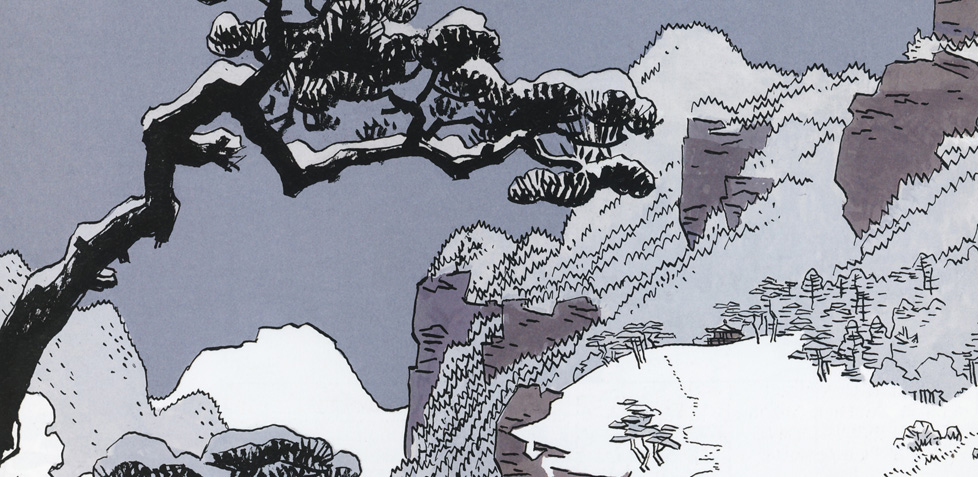
To all appearances, this album looks like
a 'traditional' Cosey-album: people, mountains, Tibet. For the story, I have already said
that it really is another kind of story as we are used to: less human - the characters are
driven by a predestined companionship. A religious/spiritual tradition has determined the
story line, has laid the tracks on which the main characters just have to run.
Farewell to Tibet
By way of his story, Cosey explains this
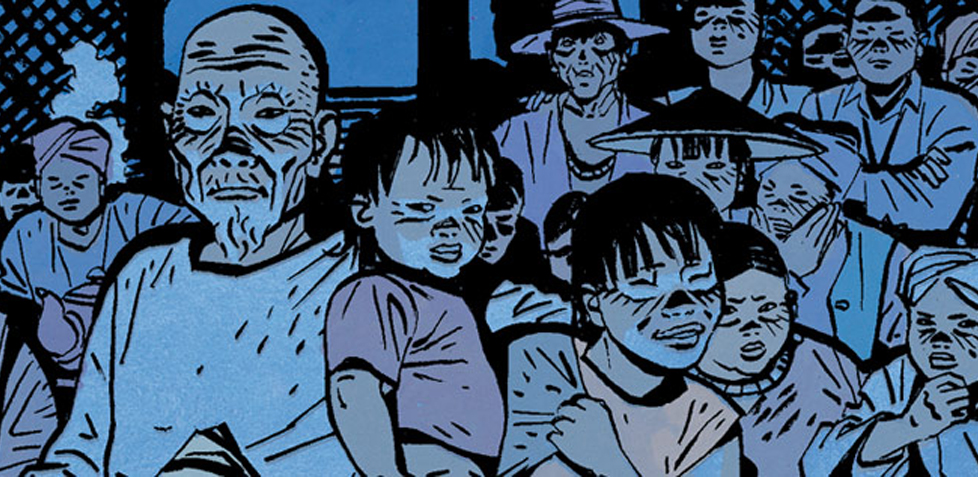
spiritual Tibetan tradition. But not only that: he shows may different shapes of
Bouddha-statues; he shows different Tibetan tribes in their traditional clothings. In
previous albums, Cosey's documentation was excellent and very visible, but it never took
the stage. In 'Le Bouddha d'Azur', some sequences look like a documentary. The art
of Cosey is just that this does not stop the fluidity of the story, but just adds to it.
The 'Bouddha-Tour around the world' prepares the reader for the 'Bouddha d'Azur' and makes
it understandable (in a purely visual way) what is so special about this Bouddha d'Azur.
Never before, Cosey has gone so far in
making a 'Tibetan' album. In fact, it can be said that Tibet is the main character of the
story, with Porridge and Lhahl in supporting roles only.
Cosey has said in an interview that he
will never draw Tibet again. 'Le Bouddha d'Azur' is his great farewell to Tibet.
François Mattille, 28 years
later...
Cosey's friend François Mattille stands
model for Porridge's publisher Timothy. In 1978 he was a model for art agent David Jones.
After 28 years, still in good shape!

|